

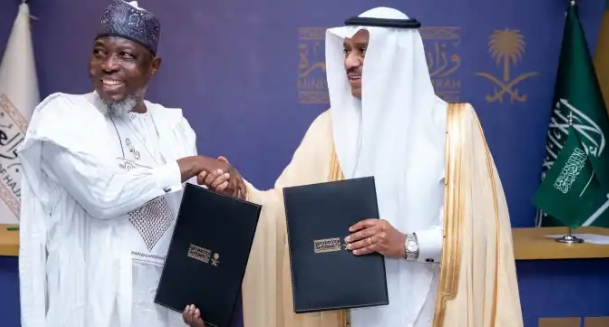

The National Hajj Commission of Nigeria (NAHCON) under the leadership of Professor Abdullahi Saleh Usman has, within a relatively short period, demonstrated that effective institutional reform, when anchored on competence and integrity, can significantly improve public service delivery. His tenure marks a clear departure from the era when Hajj administration was largely reactive, opaque, and burdened by recurring operational challenges.
One of the most visible successes of NAHCON under Professor Usman is the restoration of structure and discipline to Hajj planning and execution. From early engagement with Saudi authorities to strict adherence to timelines, the Commission has adopted a more proactive approach that minimizes last-minute crises. This shift has translated into better coordination of airlift, accommodation, feeding, and transportation arrangements for Nigerian pilgrims—areas that previously attracted widespread criticism.
Equally noteworthy is the emphasis on accountability and transparency. Professor Usman’s leadership has strengthened internal controls and improved collaboration with state pilgrims’ welfare boards and private tour operators. Clear guidelines, stricter compliance requirements, and open communication channels have reduced arbitrariness and enhanced confidence among stakeholders. For pilgrims, this has meant more predictable costs, clearer expectations, and improved overall welfare.
Health and safety standards have also received renewed attention. By insisting on compliance with Saudi medical guidelines and reinforcing pre-departure screening, NAHCON has taken decisive steps to protect pilgrims and Nigeria’s reputation as a responsible Hajj-sending nation. These measures, though sometimes unpopular, underscore a leadership willing to prioritize long-term credibility over short-term convenience.
Beyond operations, Professor Usman has repositioned NAHCON as a more respected institution in international Hajj diplomacy.
Improved relations with Saudi Hajj authorities and service providers have strengthened Nigeria’s negotiating position, ensuring better allocations and service quality for Nigerian pilgrims. This institutional credibility is a strategic asset that will outlast any single Hajj season.
In sum, the success of NAHCON under Professor Abdullahi Usman lies not merely in smoother Hajj operations, but in the establishment of systems, standards, and a reform-oriented culture. While challenges remain, the current trajectory suggests that Nigerian Hajj administration is moving towards sustainability, professionalism, and pilgrim-centred service—an achievement that deserves recognition and consolidation.
Equally deserving of commendation is the agility and professionalism of NAHCON’s Information and Publications Department, which has played a critical role in shaping public understanding of the Commission’s activities under Professor Usman’s leadership. Headed by Fatima Sanda Usara, the department has stood out for its firmness, clarity, and consistency in information management.
Her calm but resolute professional approach, especially in moments of public scrutiny, has ensured that accurate, timely, and detailed information reaches stakeholders and the general public, thereby strengthening institutional credibility and public trust.
Working closely with her is Mohammed Musa Danbaba, whose coordinating role has helped streamline internal information flow and align messaging across departments, ensuring coherence and precision in public communication. The contribution of Ahmed Mu’azu, Technical Assistant to the Chairman on Media, has further reinforced this structure by providing strategic media support and ensuring that the Chairman’s policy direction and institutional priorities are clearly articulated.
Officers such as Suwaiba Ahmad, Sani Shafi’i, and several others within the department have collectively sustained a high standard of professionalism, responsiveness, and teamwork. Together, they have transformed information dissemination at NAHCON into a proactive, well-coordinated, and disciplined operation—an often underappreciated but essential pillar of the Commission’s recent successes.