

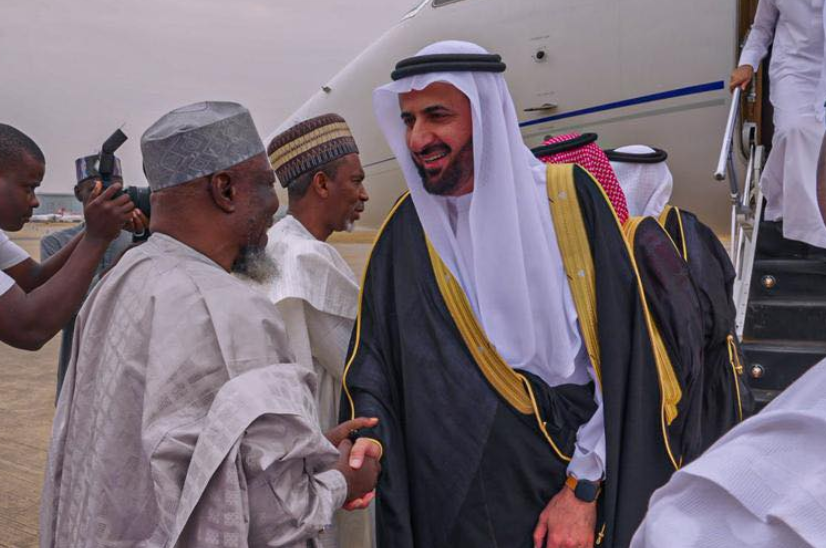

Nigeria recorded a major diplomatic and institutional milestone on February 3, 2026, with the first-ever official visit of a Saudi Arabian Minister of Hajj and Umrah to the country, signalling a new phase in bilateral cooperation on pilgrimage administration.
The Saudi Minister of Hajj and Umrah, Dr. Tawfiq Al-Rabi’ah, was formally received in Abuja by the Chairman of the National Hajj Commission of Nigeria (NAHCON), Professor Abdullahi Saleh Usman, in what officials described as a landmark engagement in the history of Nigeria’s Hajj operations.
The visit, which took place during the tenure of Professor Usman as NAHCON chairman, was widely seen as a recognition of Nigeria’s strategic importance as one of the world’s largest Hajj-sending countries and a reflection of renewed commitment by both nations to improve the welfare and experience of pilgrims.
Welcoming the Saudi delegation, Professor Usman described the visit as “historic,” noting that it was the first time a serving Saudi Minister of Hajj and Umrah was visiting Nigeria since the establishment of NAHCON. He said the engagement underscored the growing trust and cooperation between Nigerian authorities and the Kingdom of Saudi Arabia on pilgrimage matters.
Discussions at the high-level meeting focused on strengthening collaboration in the administration of Hajj and Umrah, with particular emphasis on early planning, regulatory compliance, visa management, and improved service delivery for pilgrims. The Saudi minister reiterated his country’s commitment to working closely with Nigeria to ensure a safe, orderly, and spiritually fulfilling pilgrimage for Nigerian Muslims.
Dr. Al-Rabi’ah also stressed the importance of strict adherence to Saudi pilgrimage regulations, including the enforcement of the “No Hajj without permit” policy, while assuring Nigerian officials of Saudi Arabia’s readiness to support reforms aimed at enhancing efficiency and transparency in Hajj operations.
Observers say the visit represents a significant boost for NAHCON under Professor Usman’s leadership, as it aligns with the commission’s ongoing efforts to meet Saudi timelines and standards ahead of the 2026 Hajj exercise. The engagement is also expected to open new channels for continuous dialogue and operational coordination between both countries.
Beyond its symbolic value, the visit has been described as a practical step toward addressing long-standing challenges in pilgrimage management and reinforcing bilateral ties between Nigeria and Saudi Arabia, with pilgrim welfare remaining at the centre of the partnership.